
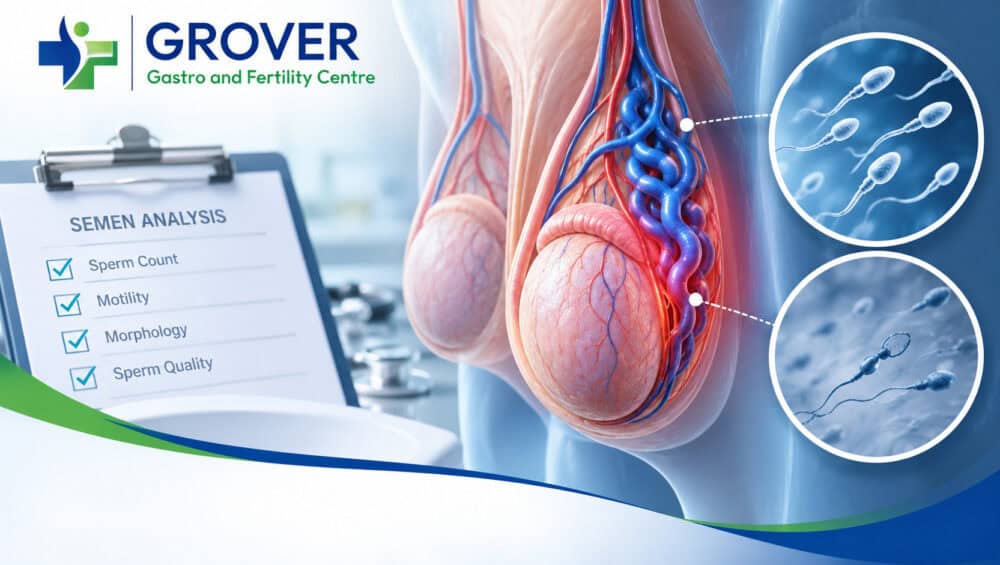
Male reproductive system with focus on varicocele and sperm analysis.CategoriesGynecology

Male Infertility and Varicocele: When a Swollen Vein May Matter for Fertility

The condition known as Varicocele is when a vein swells, which disrupts blood flow and the supply of nutrients, hence leading to fertility issues. In normal cases, this condition does not lead to fertility problems. It becomes a threat when pooled blood disrupts the normal functionality of the testicles, leading to varicocele-related male infertility, which can be reversed with the right treatments.

This condition has subtle symptoms that may not be detected at early stages, and as it progresses, it causes deprivation of nutrients and oxygen and disrupts the temperature required for sperm to sustain a healthy state. You may have so many questions about how it starts, who is susceptible and how it is treated; this blog has the answers to the varicocele male infertility questions. 

First things first: What causes Varicocele?

In usual cases, Varicocele occurs in adolescents as males go through puberty due to increased blood flow that affects delicate veins, and in some cases, Varicocele can also affect different age groups due to factors like; 

Faulty vein valves: This is when small valves in the spermatic vein are unable to keep blood moving in the right direction. 

Anatomical differences: When the left testicular vein travels at a sharp angle into the kidney, it makes blood flow slower, which causes it to swell. 

Puberty and growth spurt: The growth of the testicles causes an increase in blood flow, which exposes the weak vessels. 

Abdominal and pelvic tumors: Growths can press and block the vein, which can cause abnormal blood drainage. 

Blood clots: This is when a thrombus develops and obstructs normal blood flow.

Who is susceptible to Varicocele?

Varicocele is a condition that can happen to any man. It occurs in about 15% of men, which includes;

  • Adolescents and young men experience increased blood flow due to enlargement. 
  • It can happen to men aged 30 and above because aging can cause weakening of the vein walls. 
  • An individual with a family member who experienced Varicocele is highly susceptible to the same condition. 

At which stage does Varicocele cause infertility? 

Increased temperature: In order to produce sperm, the scrotum needs to be 2 to 3 degrees below the normal body temperature. As the swollen vein causes pooling of blood, it leads to an increase in temperature, which distorts the normal function of the testicles. 

Fragmentation of DNA: This is caused by poor blood circulation, which leads to reactive stress and oxidative stress.

Disrupts blood circulation: The swelling of veins leads to improper blood circulation, which leads to poor supply of oxygen, stagnation of blood and a lack of nutrient supply.

Disrupts hormones: The swelling can lead to reduced testosterone production, which significantly impairs sperm production.

Varicocele can lead to problems like;

  • Impaired sperm morphology
  • Inability of the sperm to swim far enough for egg fertilization, known as poor motility.
  • It causes low sperm count due to poor functionality of the testicles.

What are the treatments involved to reverse Varicocele?

Varicocele can be reversed by correcting the abnormality and restoring the functionality of the testicles for sperm production to restore fertility.

These are the treatments involved.

  • Non-surgical procedures that involve pain relievers, scrotal support by wearing snug briefs and observation for teens.
  • Surgical treatments that involve procedures like microscopic Varicocelectomy, Laparoscopic Varicocelectomy and retroperitoneal surgery.
  • Interventional radiology such as coils or sclerosis, catheter-based embolization, outpatient nature.

What are the red flags to look out for?

Varicocele is not associated with significant symptoms; as it progresses, it can lead to;

Dull ache or pain: An individual may experience a dull, persistent ache when standing.

Scrotal mass or swelling: As it progresses, it may cause the development of a large mass above the testicles. 

Differently sized testicles: The condition may cause the affected testicle to become smaller. 

The common myths about Varicocele 

Myth: Varicocele leads to permanent infertility

Fact: Varicocele can be reversed through different treatments in order to address the effects and restore fertility. 

Myth: Varicocele can only be treated through surgery 

Fact: Varicocele can be treated by either a non-surgical procedure or a surgical procedure, which is mainly dependent on the diagnosis of the condition. 

Finally 

The best way to be on the lookout for Varicocele is by ensuring that boys undergo regular check-ups to monitor the health development of the testicles, which helps to detect any abnormality at an early stage. 

Persistent subtle symptoms should not be ignored; you can always start treatment for Varicocele male infertility in Ludhiana at Grover Gastro and Fertility Centre, where Dr Vaishali Grover provides expert treatments that are tailored to your body’s health needs to alleviate the symptoms and restore functionality as they take you through the varicocele male infertility guide. 

FAQ’s 

Can Varicocele recur after treatment?

Varicocele can have persistent recurrence, which is mainly dependent on incomplete treatment, collateral circulation, technical issues and lifestyle factors. 

How long does it take to recover from varicocele treatment?

Recovery is dependent on the type of treatment done, which may take around 2 or 6 weeks. 

Can Varicocele lead to cancer?

Varicocele is a benign condition that does not cause cancer but involves enlargement of the vein inside the scrotum. 

What are the diagnostic treatments involved for Varicocele?

The diagnostic treatments involve physical scrotal examination, scrotal ultrasound, supplementary lab tests, pelvic MRI and venography. 

Is it possible for Varicocele to go away on its own?

Varicocele does not go away on its own because it’s a structural problem that requires medical treatment.


Woman consulting with a doctor about recurrent miscarriages and reproductive health.CategoriesGynecology

What Does Science Say About Causes And Treatment Solutions For Recurrent Miscarriages?

Recurrent miscarriage means you have experienced 3 or more miscarriages. An early miscarriage is defined as occurring during the first trimester, or within the first 12 weeks of pregnancy. According to specialists, pregnancy is not the same for everyone. If you have experienced recurrent miscarriages, then consult with specialists and find out why this happens and methods to manage it so that you can go ahead with a successful pregnancy. 

The common causes of miscarriage include structural abnormalities, PCOS, and hormonal imbalance in the woman who is trying to conceive a baby. Before conceiving, it’s important to manage such problems that are responsible for interrupting the process of a successful pregnancy. To manage the cause of recurrent miscarriages, specialists recommend various recurrent miscarriage tests to evaluate the exact cause of the recurrent miscarriage so that they can recommend the treatment accordingly. 

In this guide, you will get to know about the causes of recurrent miscarriage in detail, along with tests and treatments. 

Causes Of Recurrent Miscarriage:

Chromosomes Abnormalities: 

Chromosomes are the blocks of DNA that contain the instructions for the development of the baby. A common cause of recurrent miscarriage is that sometimes babies develop with the wrong number of chromosomes. Occasionally, the structure of the chromosome develops in the wrong way. This can also happen even when the parents have normal chromosomes. Recurrent miscarriage happens when one of the partners has abnormal chromosomes. 

Blood Clotting 

Some blood clotting disorders also cause recurrent miscarriage. They can cause sticky blood, which interrupts the flow of blood to the placenta and causes blood clots in the placenta.  If the placenta does not work properly, then the baby will not get enough blood and oxygen, which leads to miscarriage. 

All women who are experiencing recurrent miscarriage due to blood clotting are advised to undergo various tests, which are called screening for antiphospholipid antibodies. The treatment can involve blood thinning with the help of heparin and aspirin therapy.   

Hormonal Imbalance 

Having not enough or too many certain hormones can lead to complications in pregnancy and recurrent miscarriages. Problems with the thyroid are linked to miscarriage. The thyroid gland, present in the neck, produces the hormone. Well-controlled thyroid disease will not cause miscarriage. But higher levels of thyroid-stimulating hormone and the presence of thyroid antibodies can increase the risk of miscarriage. 

Tests And Treatment For Miscarriage 

Healthcare specialists who deal with the problem of recurrent miscarriages suggest some recurrent miscarriage tests in Ludhiana to evaluate the exact cause of the recurrent miscarriage. By consulting with the specialist, you get the complete recurrent miscarriage tests guide; the tests considered for evaluation are mentioned below: 

Blood Tests 

These tests are suggested to check the pregnancy hormone level in the blood. This level is repeated after 48 hours. A low level of this hormone in the blood can lead to pregnancy loss. If the changes in hormone levels are irregular, then professionals may suggest an ultrasound or more blood tests. Your blood type can also be checked. 

Pelvic Exam 

Your healthcare professional may check that the lower end of the uterus, known as the cervix, has begun to open, which makes miscarriage more likely. 

Ultrasound 

During this test, the healthcare provider evaluates the heartbeat of the fetus and figures out whether the pregnancy is growing properly or not. If the result of this test is not clear, then specialists may suggest another ultrasound in a week. 

Tissue Tests 

If this is clear in imaging testing that you have passed, and something looks like tissue, it can be sent to the lab for further testing to confirm that a miscarriage has happened so that symptoms are not tied to another cause. 

Chromosomal Tests

If you have had two or more miscarriages, then a healthcare professional may recommend blood tests for you and your partner. This test helps to evaluate whether your and your partner’s chromosomes are linked, which leads to an increased risk of miscarriage. 

Conclusion 

Dealing with the complexities of recurrent miscarriage can be a challenging journey in both emotional and physical ways for hopeful parents. However, understanding the underlying causes of recurrent miscarriage gives the opportunity to seek treatment solutions according to the condition and on the basis of what the exact cause of the recurrent miscarriage is. 

The various treatment options available, such as hormone therapies, changes in lifestyle and surgical interventions, provide a clear path towards a successful pregnancy when the medical evaluation is paired with the dedicated specialist Dr. Vaishali Grover, best gynaecologist from the Grover Gastro & Fertility Centre, which provides you with hope and vital answers to get a successful pregnancy. If you are facing these challenges, then the next step is addressing the recurrent miscarriage question with the healthcare provider. 

FAQ’S

  1. What are the common causes of recurrent miscarriage?

The common causes of miscarriage are hormonal imbalance, blood clotting, problems with the uterus or genetic changes in the baby. 

  1. When should I see a doctor?

You can see a doctor after a second miscarriage so that they can suggest medical tests to determine the exact reason. 

  1. What tests are recommended for the evaluation?

For the evaluation, the doctor may suggest blood tests or imaging tests. 

  1. What type of lifestyle modifications help to prevent miscarriage?

Lifestyle modifications like eating a nutritious, rich diet, limiting consumption of caffeine, stopping smoking and alcohol and maintaining a healthy weight help to prevent miscarriage. 

Data sources:

Mayo Clinic 

National Institute Of Diabetes And Digestive And  Kidney Disease